
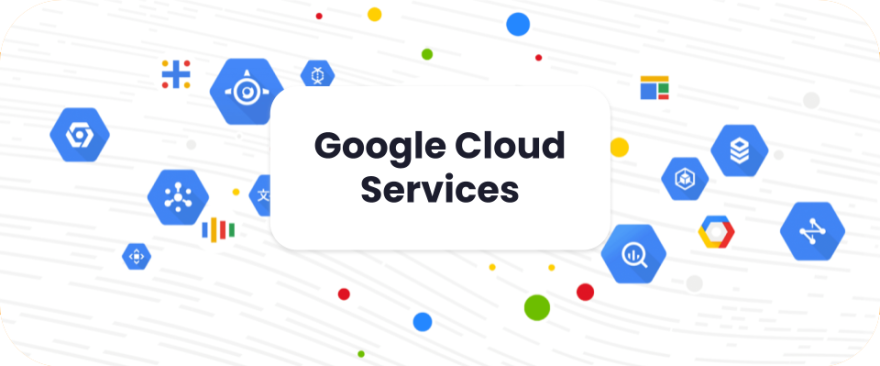

The ecosystem of Google Cloud Services It is very spacious and offers many tools for development of companies and technicians. As we've seen in other posts, Google Cloud is the infrastructure massive and on the cloud of Google, which manages the traffic and work of all Google users in various regions of the world.
In the Cloud ComputingWhat you knew as software and hardware products become servicesWhen you develop your website or application on Google Cloud, you combine and mix these services to provide the infrastructure you need, and then add your code to create what you want.
For their part, Google Cloud It stands out for its wide range of services, such as Infrastructure as a service (IaaS)Platform as a Service (PaaS) or Software as a Service (SaaS). It offers solutions for Databases, cloud storage and networkingFurthermore, customers of Google Cloud Platform can access it for free cloud console.
1. How to get started with Google Cloud?
As we have discussed in previous articles, Google Cloud Services It offers a wide range of services, each focused on different problems or needs. However, within this world of possibilities there is a learning curve that we must overcome in order to be able to to get the most out of the tools that we have available. To help you get started in this world, we've put together a series of recommendations to make the beginning as easy as possible and help you enjoy the journey.
One way to begin is to find a project you want to work onWith this in mind, we can address the different types of modules that exist in GCP to address our idea. These projects can be: Data, data storage (whether SQL or NoSQL), data pipelines, Artificial Intelligence, Machine Learning, servers in virtual machines, etc.
Another way to get started is to use the Google documentation along with their free courses that we can find in Cloud Skill BoostHere you'll find not only video guides, but also quizzes to test your knowledge and testing labs, the latter being paid for with credits or a monthly subscription. The advantage of this option is that we won't miss out on the theory and we'll find direct links to the documentation for each tool we are studying.
It is also divided into categories depending on the purpose, and the laboratories can be found by filtering by tools or title. The great advantage of this is that although we are advanced and already using GCPWith this, we can carry out small deployments in a controlled manner. without risk of generating consumption and with a step-by-step guide.
2. What services does Google Cloud offer?
Google Cloud offers all kinds of cloud services focused on solving problems or addressing needs that both individuals and companies may have. On the website of Google Cloud Developer Cheat Sheet it's possible Find all available modules with a brief description of each and grouped by color into categories.
Among the wide range of services, we can highlight the following:
 Compute with Compute Engine, App Engine, Cloud Run, GKE (Google Kubernetes Engine) and Cloud Functions
Storage with Cloud Storage
Database with BigTable, Cloud Spanner and Firestore
Data Analytics with BigQuery, Data Flow, Data Prep, Data Proc and Pub/Sub
AI/ML with AutoML, Vertex, Cloud Vision, DocumentAI, Text-to-Speech
3. Google Cloud Features
Among the characteristics that exist of Google Cloud Services As partner premiers, we like to highlight the Easy to use, both for the excellent UI/UX in your consoleas well as for the ability it grants to perform a deployment in a few stepsleaving operational solutions that may be complex.
It's important to clarify that experience is a key factor in this, since regardless of knowledge, each project is a different world and faces specific problems, and Proper configuration is essential to avoid incurring high costs or low performance in the implemented solution.
Another important point is the billing section, where it allows us to see in detail the daily usage of the consoleThis allows us to categorize each deployed tool. In addition, we can generate custom charts to view costs, and even create budgets with email alerts that notify us when we reach specific consumption thresholds we configure.
4. Advantages of Google Cloud Services
It is undeniable that data is the new oil, as several people have already mentioned, and this Google He knows this, which is why, among the advantages we can find, it is impossible to overlook the strong focus on the tools for data processing which we talked about at the beginning of the article.
From data ingestion with its powerful integration capabilities across diverse data sources, to pipelines for transforming, optimizing, and preparing this data, and finally presenting it in dashboard tools as Looker Studio or Looker, where the most important insights will be reflected.
This is coupled with the various Machine Learning and Artificial Intelligence solutions pre-trained, which we can use to transform audio to text, text to audio, obtain text from images or PDFs among others, label images to perform sentiment analysis from text.
In addition to this Google Cloud Services offers a range of computing toolswhere we can build tools designed from scratch to perform any task we want from the cloud. microservices or APIs, mounted in Docker containers and orchestrated with Kubernetes...even specific functions deployed in a few steps, thus freeing us from greater complexities when instantiating resources.
5. How secure is Google Cloud Services?
Google places a lot of emphasis on security which it offers, since it is a vital point, considering that it offers comprehensive solutions, where it can be carried out any on-premise solution to the cloud. The security that Google uses for Google is the same security it offers to... GCP users, without differentiating between users with lower or higher consumption. Furthermore, it generated its own private global network, which provides a high performance and superior reliability.
Regarding the facilities, data centers use a multi-layered security systemBuilt-in redundancy and fault tolerance. Even employee access is limited.
The most important point to consider when evaluating the safety of Google cloud It is the use we make of it and the access we grant. Within the modules there is one called IAM, which is where, among other things, we can manage which users will be able to log inwhich modules they will have access to and define its scope. The same applies if we create solutions that will have internet access, such as virtual machines or microservices, or even APIs; it will be the responsibility of whoever manages this to use the correct configurations. avoid any type of incident.


 EN
EN  ES
ES  BR
BR